Showing posts with label privacy. Show all posts

Sunday, May 11, 2014

Talking to Kids About Social Media and Other Online Activities

Parents and teens likely see social media activities differently
Parents and teens see social media and other online activities differently. A parent's best bet? Be a good listener
In what is likely no real surprise to savvy Web watchers, but may have been a rude wake up call to parents with kids who are all over social media, it turns out nothing is really ephemeral on the web.

Evidence came recently as The New York Times reported that Snapchat, the popular mobile messaging service, agreed to settle charges by the Federal Trade Commission that messages sent through the company’s app did not disappear as easily as promised and that it may have misled users about how their information is stored and shared, even if unintentionally. 

This development has likely wiped away the last traces of the "what happens on the Internet stays on the Internet" thinking.

But with younger and younger kids getting online (because even toddlers see their parents use all kinds of devices) what does this mean for parents concerned about their kids roaming the social web?

How do parents talk to their kids about being smart on social media, what they share there and who they share it with? Some ideas: 

Kids under 10: A 2013 study found more than half of children use social media by the age of 10. The good news? Two thirds (67 per cent) turn to their parents when they experience difficulties online, the poll found.

How can you help kids at this age?
  • Be there: Help kids understand they can ask you anything about online and you’ll answer without judging. This encourages them to come to you first.
  • Show them:Sometimes kids at this age are too accepting of what’s in front of them. Find gentle ways to tell them that some people share inappropriate things just to get attention and, worse, some have bad intentions. Repeat this message regularly because at this age repetition is what makes a message stick.
  • Don’t wait: It’s especially important to take any opportunity (a TV show, a conversation about one of their friends) to talk openly about the good and the bad on the web in general and social media in particular. Again, let them know they can come to you with any questions.
  • Be patient: Small doses of information, repeated as needed (not nagging) will eventually get the message there.
  • Guide them: Suggest that sharing anything online with anyone other than a family member or a friend their parents know may be dangerous.
Kids 11-13: Legally these kids are still too young to be allowed a Facebook page, for example. But the reality is that more than half of them are on Facebook and other social networks. 

In addition to the steps above how can you specifically help kids at this age?
  • Understand:At this stage kids might be unrealistically confident about their ability to handle themselves online. Gently ask questions that show them situations they might not know how to handle.
  • Set limits:Now is the optimal age to get agreement (in writing if you must be sure it’s clear) about how much time on social networks and at what time of day is OK. Modeling good online habits can also make this easier. Start with no more than an hour per day (perhaps broken up into 30 minutes after school and 30 minutes after dinner).
  • Co-opt a sibling:If there is an older sibling in the house ask them to help their younger brother or sister navigate the online world. This will depend on the age and maturity of the older child, but it can also be a way for the younger child to hear of scary experiences and learn from the other’s experiences.
  • Discuss bullying: This is the age that online bullying can become an issue. Talk about this with kids and encourage them to speak up when they see it.
  • Offer empathy: At this age they will hate the limits. It’s their job to test limits and yours to set them based on your values.
Kids 14-18: Probably the most-dangerous ages for teens online. They’re doing what teenagers have always done – trying to figure out where they fit it, how to be cool and how to push the limits – except now they are doing these things online in places that might keep public records of that activity forever.

They’re also old enough to know their way around the social networks and, mostly, nowhere near mature enough to understand the consequences of everything they do online.

In addition to the steps in the age groups above how can you specifically help kids at this age?
  • Listen:Keep track of the big things the kids talk about and the little things. Listen for anything that suggests social media is causing stress in their lives. Ask about that stress. If kids at this age are using social media to relax and communicate, that’s normal. If they are using it and its causing them to get upset, there’s a problem.
  • Ask: Come up with non-threatening, non-judgmental ways to ask your kids what they really like about a social media platform they are on. Reassure them that you’re just curious. Ask them to show you how a social network works (because it’s highly likely they’re on some platforms you aren’t). And, again be hyper aware for any signs that social media is causing distress and offer to be a set of ears.
Kids, 18 and Older: Yeah, they’re not really kids anymore, but online they are likely still acting like kids.

Despite the talk about how future employers, voters and even future spouses etc. will become increasingly tolerant of youthful online indiscretions, it is far more likely that things you do at 18 or older could and will haunt you in the future.

At this age what can you do to make them realize that the "web is forever"?
  • Show:Ask if you can show them something about yourself that was posted online many years ago that no longer represents who you are or how you’d like people to think about you. Now ask them to imagine a scenario when that posting involved something that an employer might find objectionable. Use this as a springboard to discuss such ideas as "think twice, send once" and "How would grandma (or someone else important in their life) feel if they saw this?" All the while being non-judgmental and expressing that their future happiness is your primary concern.
  • Reassure:Try to take the discussion to the next level by asking about things that your child sees or hears online that make them uncomfortable and how they handle that. Tell them that they likely have a good "internal compass" and if something makes them uncomfortable they don’t have to be part of it and you’re always available to answer questions.
So, what do you think? Are there other things parents can do to help their kids navigate and stay safe online and in social media?

Related posts:
9 Ways to Maintain (Some) Privacy on Social Media, the Web
10 Tips for Social Media Beginners
Hey baby, not on social media? This might help …


Wednesday, December 18, 2013

Facebook is coming to town; Ho-Ho….No!

They know when you've been sleeping,
They know when you're awake.
They know when you've been good or bad,
So be good for goodness sake!

Is Facebook being revealed as a grinch during the holiday season?
Facebook is, in the height of holiday season, being revealed as at least as big a snoop as the Jolly Old Elf or even the NSA (National Security Agency).

In a story on Slate a few days ago it was revealed that Facebook is … analyzing thoughts that we have intentionally chosen not to share.

That’s right: When you start to write something on Facebook, but change your mind and delete it that material does not just disappear. No, Facebook has been scooping it up and analyzing it to study what two FB researchers call "self-censorship."

But what’s to stop Facebook from using all this data for other reasons? For example, to serve us even more highly targeted advertising? That would be a fairly benign result.

As the Slate story points out some people might compare this to the FBI’s ability to turn on a computer webcam without the user’s knowledge to monitor for criminal activity. The difference is that the FBI has to get a warrant for that kind of surveillance. In Facebook’s case no warrant is needed.

The Facebook researchers say that decreasing self-censorship is a goal of the social network because such censorship decreases the quantity of content (and thereby the quantity of researchable data) publicly on the platform.

But the bigger question this brings up is: Can Facebook be trusted? History would tend to suggest it cannot.

Under Facebook’s Data Use Policy, there is a section called "Information we receive and how it is used." This makes clear that the company collects information you choose to share or when you view or otherwise interact with things. But nothing suggests that it collects content you explicitly don’t share.

So what do we, as users, do about this? The likely answer is: Nothing except maybe think twice before typing in anything on Facebook.

Several studies have indicated that any concern about trust may be limited to older users of Facebook.

Data collected by MDG Advertising from the American Consumer Institute Center for Citizen Research, Anonymizer, Harris Interactive, MSNBC and The Ponemon Institute shows that overall "2 out of 3 active online users do not trust" the social media sites they are using. These numbers are based on users of all ages.

Click on the graphic to see the full report and infographic.
Do we trust online sites we use?

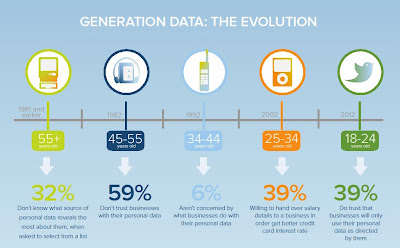
On the other hand a 2012 survey conducted by YouGov in Britain (and finding similar data to older surveys in the United States and elsewhere) found that the younger users of online services such as a social media site are more likely to trust that online service.

Click on the graphic to see the full report and infographic.
Online trust changes with age

All of which underscores that these latest revelations will make older users of Facebook are more likely to be concerned about privacy and it make very little difference for younger users.

What do you think? Should a social media platform be completely transparent about what information it is looking at and how that information is being used?

Related posts:
Facebook’s next big privacy change is still coming
Social Media Scams: 11 Tips to Fight Them
At the IPO: 5 Warning Signs of Facebook’s future

Sunday, October 27, 2013

Facebook’s next big privacy change is still coming

Have you seen the warning signs?
We’re all on Facebook and seemingly can’t give it up, but should we?

In 2013 there have been some big changes in the way the social network handles its users' privacy.

The latest round of Facebook changes had a huge impact on teens and their online privacy. 

You might recall that earlier in October Facebook caused a stir by changing settings so that teens could make themselves discoverable on the platform.

In an Oct. 16 Los Angeles Times piece Facebook loosens privacy policy on teens' posts Jeffrey Chester, executive director of the Center for Digital Democracy, called on federal regulators to step in and protect teen privacy.

"To parents and teens, Facebook is claiming they are giving them more options to protect their privacy. But in reality, they are making a teen's information more accessible, now that they have the option to post publicly," Chester said, adding: "Today's announcement actually removes a safeguard that teens currently have."

Yes, Facebook says one thing but in reality seems to do another.

In an excellent piece on Bloomberg.com by Evan Selinger (a colleague at RIT) and Woodrow Hartzog Why Is Facebook Putting Teens at Risk? they argue that "… the most important reason Facebook shouldn’t have introduced this change is that teens need opportunities to fail safely. They must be allowed to experiment -- to make mistakes and to learn from them."

"As parents, our job is to encourage them to explore ideas, experiences and even personas," Selinger and Herzog say. "Responsible companies will do their part by offering teens technologies that enhance personal development and strive for minimal risk."

And the recent teen privacy changes come on top of Facebook’s earlier introduction of Graph Search (March, 2013).

Megan Marrs, in a well-written post Facebook Graph Search & Privacy Concerns: Should You Be Worried?” says Graph Search is “Now with more stalking power!” She describes how once anything that might have embarrassed you on Facebook was, over time, buried which was sometimes referred to as "privacy by obscurity." But now Graph Search means almost anyone can find anything at any time. Should you be worried? Her answer is a resounding “Yes!”

But wait, there’s more.

Facebook has a proposal in front of the Federal Trade Commission that would make your privacy even more of a thing of the past.

Vindu Goel, writing in the The New York Times’ Technology page in a piece called Facebook Eases Privacy Rules for Teenagers, notes that the Federal Trade Commission is conducting an inquiry into other proposed changes to FB’s privacy policies.

Goel notes: "Those policies would give Facebook automatic permission to take a user’s post, including a post made by a teenager, and turn it into an advertisement broadcast to anyone who could have seen the original post."

Facebook, it seems, is bent on erasing personal privacy in every corner of its network.

What can you do?

To argue for protecting children online you can contribute to the comments section of two proposals made to the Federal Trade Commission under the Children's Online Privacy Protection Rule at FTC Extends Public Comment Deadlines on Two COPPA Proposals -- there is a Nov. 4 deadline.

So what do you think? Is there any expectation of privacy on social networks such as Facebook? Or should people continue to use FB and other social media knowing that sooner rather than later they will not be able hide anything?

Possibly related posts:
9 Ways to Maintain (Some) Privacy on Social Media, the Web
(From 2012) At the IPO: 5 Warning Signs of Facebook’s future

Sunday, October 13, 2013

9 Ways to Maintain (Some) Privacy on Social Media, the Web

Online privacy can be hard to maintain
Privacy and social media might seem to make odd bedfellows and recent moves by some of the biggest online companies might make you think any privacy on social networks and the Internet is impossible.

This month alone: Facebook has removed another privacy setting and Google is alerting users to a change in its terms and conditions that allows your image and name to appear in Google ads. This, in October, the month Homeland Security has declared National Cyber Security Awareness Month. Not to mention the ongoing concerns about mass surveillance of online activities carried out by the U.S. National Security Agency (NSA) and its international partners. All the while, corporations are eagerly tracking data regarding your browsing habits and purchasing preferences.

So what, dear Web Wanderer, can you do to protect some shreds of your privacy on social media and elsewhere on the Internet?

9 Ways to maintain (Some) Privacy

1. Sign in and out of your online accounts: Yes, it’s convenient to have a computer remember passwords and other login details, but you’re playing with fire. At the most basic level it means anyone can sit at your computer and "be you" on your networks. At a more sophisticated level anyone who does hack into your computer now has access to your accounts. So, logout when you’re done and log back in each time …

2. Be a "Friends Only" kind of Facebook user: Understanding your FB settings may take 30 minutes one day, but it will be the best half hour you spend on yourself on the social network. Remember that anything other than the "Friends Only" setting means people you don’t know can see and share a lot about you. You also should be aware by now, but some apparently are not, that Facebook’s default is to set all of your privacy settings to "public."

3. Use a password on your devices: If you’re not using a password to get into your smartphone or laptop etc. that’s the equivalent of leaving your apartment or car unlocked. Think about the treasure trove of personal information now stored on those devices. Maybe, just maybe, someone finding your device won’t take advantage, but maybe not.

4. Turn on 2-step Authentication in Gmail: This means that in order for your Gmail account to be accessed from a new device, a person needs a code that's texted to your cellphone. So, even if someone gets your password somehow, they won't be able to use it to sign into your account from a strange computer.

5. Encrypt everything: Whole-disk encryption of computers isn't a bad idea. If your laptop is lost or stolen, it's nearly impossible for anyone else to get into your data without your password. The latest versions of Apple's iOS automatically encrypt the entire smartphone or tablet if a passcode is enabled. On Android devices, encryption is an easy option in the Settings menu.

6. Clear your browser history and cookies regularly: Consider changing your browser settings so that the cache is automatically cleared every session. Go to the Privacy setting in your Browser’s Options and tell it to "never remember your history." This will reduce the amount you’re tracked online, although a recent New York Times story – Selling Secrets of Phone Users to Advertisers – shows that the growing field of anonymous data tracking may eventually make this a moot point.

7. Review the apps that have access to your social media accounts: Regularly review which applications have access to your social media accounts. Revoke access for applications you no longer use. In future: make sure applications you download use social media carefully. If they ask for your contacts and to post to your account don’t agree to this lightly.

8. Get an app that you can use to remotely wipe your device if it is stolen or lost: Some of these apps can show where the thief took your phone and can erase all the data. All of them allow you to do this from a separate device.

9. Put a Google Alert on your name: Go to Google Alerts enter your name, and variations of your name, with quotation marks around each. Select how frequently you want alerts (daily is probably fine for most of us) and where you want them sent. It’s the easiest way to stay on top of what's being said about you online. Just be aware: it may only catch 85 to 90 percent of mentions and some alerts may take more than a day or two to get you. But it is free.

Other ideas:

Five ways to stop the NSA from spying on you (from the Washington Post) offers ways to thwart the agency's snooping.

Strategies People Use to be Less Visible Online is a story from the social media news aggregator Mashable. It finds that "64 Percent of American adults protect their online identities by clearing cookies and browser history" and has a useful chart listing all of the other tactics its survey respondents said they practiced.

In the future:

Imagine a small box sitting next to your computer that encrypts everything you do online. That’s the principle behind a device call the Don’t Snoop Me Bro Tunnel that I first read about recently on the Bit Rebels site. The DSMB will be (when it is available early next year) an out of the box plug-and-play technology that connects to your computer and claims to completely camouflage your online presence. The Bit Rebels story linked to here has a full description and demo video.

So, there you have a few ideas that might help you hang onto or gain back some shreds of privacy. Of course, the ultimate road to privacy is to stay off the web altogether and to erase all past history on the web … yeah, right! Like that is going to happen.

What do you think? Can you maintain some privacy and still engage on social media and the Internet?

UPDATE: Since writing this post another big change has hit if you are concerned about online and social privacy. The app Snapchat prided itself on having its messages disappear after a few seconds. But as of Oct. 14 a new app called SnapHack allows people to keep and retransmit messages from Snapchat. Read more at Business Insider - http://j.mp/SnapHack 

Possibly related posts:
10 Tips for Social Media Beginners
A New Online You

Sunday, March 25, 2012

For better or worse: Facebook Timeline is here!

Facebook Timeline is here for everybody this week (March 30) …. and for some it will be overwhelming.

As previously noted, this next evolution of Facebook, was not welcomed by all Facebookers, but was going to happen regardless because of the advertising opportunities it presents Facebook. The layout gives FB several prime advertising spots. Look for ads to start showing up soon (if you haven’t seen them already).

There are some things (some good and some otherwise) that Timeline changes about Facebook:

Apps gone wild: Facebook now has more than 3,000 apps that can be added to individual timelines. While this should make Facebook more fun there may be a downside (see the next point). In any case to learn more you can also visit the official Facebook Timeline Apps page.

Apps and privacy: As CNN Money reported on March 23 in Facebook strips 'privacy' from new 'data use' policy explainer a Facebook data policy document intended to make the site's methods more transparent is instead kicking up a fresh firestorm. It clarifies that Facebook's current terms allow apps to tap into all of the information that the app's users have access to.

  "This is a significant acknowledgement that Facebook is focused on data collection, data storage and data sales, because that's where they make their money," says Sarah Downey, a privacy analyst at security software company Abine. "They're more accurately describing what they do." Some 32,000 Facebook members in Germany issued the same one-sentence protest which roughly translated as: "I reject the changes."

Business pages: Timeline for business pages brings a lot of new functionality for business, but also takes away some features that were being abused. For a great summary of these see Adeo Group’s Facebook Timeline Checklist for Your Business Pages. In a nutshell Timeline should give business owners more flexibility and options for customizable content.

Too busy running a business? Business owners may think they don’t have the time to pay attention to Facebook’s evolution, but Forbes recently posted a great report by Mari Smith called Facebook 101 for Busy Business Owners that cuts through a lot of the confusion. This piece will quickly help business owners understand why investing a little time in a Facebook could pay dividends.

If you have just a litle extra time you should read 15 Must Know Tips to Rock Your New Facebook Timeline Business Page by Pam Moore. This is an excellant wrap up on the key things you need to know re Facebook business pages.

And one final warning: Don’t fall for the "Remove Facebook’s Timeline" scam that is now widely circulating. The scams range from getting you to click through to a scam survey to hacking your Facebook profile (so the hackers can spam all your friends). There is no going back to the old Facebook no matter how badly you want to. Read more at: Can you remove Facebook's Timeline feature?

Whether you've adjusted to the new Timeline or are still struggling to make sense of it, some previous posts might help:

Timeline basics: This looks at what the change means and how to clean up your past history on Facebook.

Privacy settings and friends: This examines whether you need to reconsider your definition of a "friend" and helps you re-examine your privacy settings.

Using Friend Lists: This looks at how to manage Friend Lists in two different ways.

Final preparations: A checklist to get ready for Timeline and how to set up regular reminders to check your Facebook privacy settings.

So, what do you think ? Is Timeline a good thing or not-so-much?

Saturday, January 7, 2012

A New Year Checkup – Facebook: Step 4 - A Final Check

It’s a new year and it’s time for social media types to be more conscientious about their social outposts. As part of a focus on social media strategy this is the fourth in a series about Facebook.

If you have followed this series then you’re ready to double-check that you’re done.

A Final Checklist

• Changed Facebook to Timeline    Yes     No

• Checked each month and each year’s postings to hide anything inappropriate    Yes     No

• Checked my Privacy Settings    Yes     No

• Sorted my Friends into the appropriate Lists    Yes     No

• Took a look at my Profile as others see it    Yes     No

No? If you want to do this visit your profile and go to "View As …" at the top. Those with Timeline should first click the wheel next to "Activity Log." Enter the name of a close friend, a co-worker or a random acquaintance to make sure no one is seeing too much. Click "public" to see how everyone else sees it.

A Final Warning

Facebook makes changes … a lot! In the past it has added functions and reset privacy settings without making any kind of announcement. So maybe it’s time to set up a regular reminder – monthly, quarterly or, at the very least, annually – to go through this kind of checkup.

As is true on all social media you should use these networks with a "buyer beware attitude." If you’re uncomfortable about something you have three choices, ignore it, turn it off or abandon that social network.

Yes, that last choice is one I’ve made with several social networks in recent years and one I have come very close to making with Facebook. Good luck.

Was this post helpful? Will you check your Facebook settings more regularly in the future?

Related links:
• Facebook Checkup Step 1 - The Timeline
• Facebook Checkup Step 2 - Privacy-Friends
• Facebook Checkup Step 3 - Lists

A New Year Checkup – Facebook: Step 3 - Friend Lists

It’s a new year and it’s time for social media types to be more conscientious about their social outposts. As part of a focus on social media strategy this is the third in a series about Facebook.

Consider Using the Lists Function

Do you really want to share everything with everyone you’re connected to on Facebook? Probably not.

You can start your control of who sees what in two ways.

First you can go to Lists (on the left side of your home page – where you may have to click on the “More” to see it). Facebook automatically adds some of your friends to lists and suggests dozens of others.

Next, look at "Close Friends." Again, Facebook adds some friends and suggests others.

Then there is a "Family" list where you can choose the people you’d want to share more with. In this case, those you’re adding will be told, so if you don’t want that known, create a new list rather use the one Facebook set up. To do that, click Lists and then Create List.

The thing with Lists: Some people are in multiple groups, others in none. The lists make it easier to share posts with only a subset of Facebook friends or see only posts from specific groups.

Facebook also has a "Restricted" list where you dump those you don’t want to share much with. Facebook promises not to reveal who gets added.

The second way to manage lists is more time-intensive, but can be done any time you’re on Facebook.

When viewing your feed you simply have your cursor hover over a name. This causes a popup mini-profile of that person including a Friends button. Hover over that button and a drop-down menu will give you the option of adding the person to a list or unfriending them.

How to
• Work With Facebook’s Improved Friend Lists
• How To Use The New Facebook Lists (And Why You Should)

Was this post helpful? Will you take the time to organize friends into lists?

Related links:
• Facebook Checkup Step 1 - The Timeline
• Facebook Checkup Step 2 - Privacy-Friends 
• Facebook Checkup Step 4 - Final Checkup

A New Year Checkup – Facebook: Step 2 - Privacy Settings and Friends

It’s a new year and it’s time for social media types to be more conscientious about their social outposts. As part of a focus on social media strategy this is the second in a series about Facebook.

Check your privacy settings

Facebook insists that the pending switch to Timeline for all 800 million of its users will not change any individual’s privacy settings. But this ignores the fact that Timeline will expose everything you’ve ever done on Facebook.

Besides, when was the last time you checked your privacy settings? Do you know what your current privacy settings are?

Given Facebook’s troubled history with privacy – since 2009 Facebook has automatically reset users’ privacy settings to public at least four times – now is a great time to check them. (You can click on the "Facebook on Privacy" link below or on your Facebook page go to the pull-down menu on the top right of your Profile page and select Privacy Settings.)

And while you are considering your privacy you might also reconsider your definition of a "friend" – because even if your privacy settings remain the same, your list of friends likely continues to grow.

This probably means your definition of a "friend" has grown over the years and now includes such people as parents, bosses and random people you met at a conference. Someone you didn't know in 2008 would suddenly have easier access to something you posted then.

This might be a good time to open up your friends list and do some pruning. A friend’s ex-wife? A sibling’s friend in another state/country? An acquaintance who has 2,000 friends and never interacts with any of them? It’s time to tidy up that list. And don’t worry: Facebook doesn’t alert the people you drop.

How to:
• Understand Facebook Privacy
• Adjust Important Privacy Settings
• Decide Who Sees What on Your Wall

Was this post helpful? Do you keep up with your privacy settings? Will you be doing it more regularly now?

Related links:
• Facebook Checkup Step 1 - The Timeline
• Facebook Checkup Step 3 - Lists
• Facebook Checkup Step 4 - Final Checkup

A New Year Checkup – Facebook: Step 1 - The Timeline

It’s a new year and it’s time for social media types to be more conscientious about their social outposts. As part of a focus on social media strategy this is the first in a series about Facebook.

Get ready for Timeline

First, consider whether you want to stay on Facebook once Timeline becomes the default way you interact on Facebook. Some privacy advocates are now concerned that the new Timeline will allow Facebook even more access to your information and will then share that data with others (businesses). For example the Electronic Privacy Information Center has sent a letter to the Federal Trade Commission outlining its concerns that Timeline violates the 2011 agreement between Facebook and the FTC on user privacy.

But if you aren’t ready to bail on Facebook yet you need to understand that sooner or later you will be on Timeline and how it will affect the information others will see on Facebook.

Timeline gives a much more personalized presentation of information, with a large photograph at top and a timeline of all your Facebook updates – a virtual scrapbook of your Facebook life. On the upside, users can fill in missing moments from birth until present day. On the downside, every update, every photograph you’ve placed on Facebook or been tagged in and every ill-considered or likely-to-be-taken-out-of-context moment is there.

That’s why you need to spend some time today, or at least this week, switching to Timeline (see links below) and looking through your Facebook history.

Once you switch to Timeline only you will see your profile in this new way for seven days. This grace period allows you to hide or delete material that you don’t want the world to see. For example, I’m not very active on Facebook, but in 3-plus years I had made several comments that, taken the wrong way and out of context, could seem unkind, rude or worse. They are now gone from public view.

It’s an irony that Timeline is really Facebook’s acknowledgement that it has been saving much of your data, even after you delete it. If this is a big concern for you … remember, you can always leave Facebook.

How to:
• Enable Timeline With One Click
• Decide How to Set It Up; What to Do and What to Avoid

Was this post helpful? What has been your experience with Timeline?

Related links:
• Facebook Checkup Step 2 - Privacy-Friends
• Facebook Checkup Step 3 - Lists
• Facebook Checkup Step 4 - Final Checkup

Monday, May 31, 2010

Facebook And You: Is There Still Love?


Before deciding if you’ll join the Quit Facebook Day over concerns about how Facebook treats the privacy of its users’ information you may want more information. Here’s a short collection of recent web posts that may help:

PC World (May 27)Facebook's Privacy Changes: Are You Satisfied? Excerpt: “It's a given that these tweaks won't satisfy every unhappy camper …”

The Tech Chronicles (May 28) Study: Mass exodus over Facebook privacy flap won't happen Excerpt: “Privacy issues won't cause a mass exodus from Facebook on May 31, but people are being more careful about how they use the popular social network, a new poll said.”

The Washington Post (May 29)What sites such as Facebook and Google know and whom they tell Excerpt: “Many online service providers over the past few years have been building huge dossiers with minute details of each user's online activities - a practice that isn't usually mentioned in privacy policies.”

PC World (May 29)Facebook's Privacy Reboot: Is That all You've Got for Us? Excerpt: “Making privacy easy while providing lots of control is a fundamentally thorny challenge. If Facebook has failed to nail it, it's not because the company is stupid, evil, or careless -- it's because this stuff is hard.”

Wikipedia Criticism of Facebook page. Excerpt: “Several web sites concerned with social networking have criticized the lack of information that users get when they share data.”

So what do you think? Should you stay on Facebook?

Related post:
Poem: Facebook – Have I Trusted You One-Too-Many-Times?

Thursday, May 27, 2010

Facebook: Have I trusted you one-too-many times?

By Mike Johansson

Facebook, where people come to share and post
Has been the place with users most
Five hundred million some say are there
Giving personal info they’re happy to share
The Zuckerberg? He smiles with glee
The more the merrier, says he
From early days in a college dorm
His social platform is now a global norm

And yet, all is not well in FB land
As the masses suspect a hidden hand
The rumors of Zuck and FB secretly sharing
Their personal data leaves them fearing
And reminds them of the days gone by
When FB privacy was changed on the fly
Users discovered that Facebook’s data keepers
Had opened everything up … even to creepers

So now the Zuckerberg is all a-flutter
The FB reputation: May be headed to the gutter
Has trust been broken just one too many times?
Why … questions are even being asked in rhymes!
So have Zuck and Facebook earned a chance
To keep us around for the social media dance?
Or will May 31 find many of us – even most
Leave to find a more trustworthy host?

So, will you stick with Facebook?
